

For many years after our Stockholm New era, we with BrittonBritton were commissioned for countless projects related to the “official global image of Sweden,” by government agencies and organizations such as the Foreign Ministry, the Swedish Institute, VisitSweden, VisitStockholm, and others. It was never easy but always complicated—politically sensitive, with many often conflicting interests and requests to satisfy, a great deal of anxiety and nervousness, frequently absurdly tight budgets, clumsy, amateurish clients, and so on.
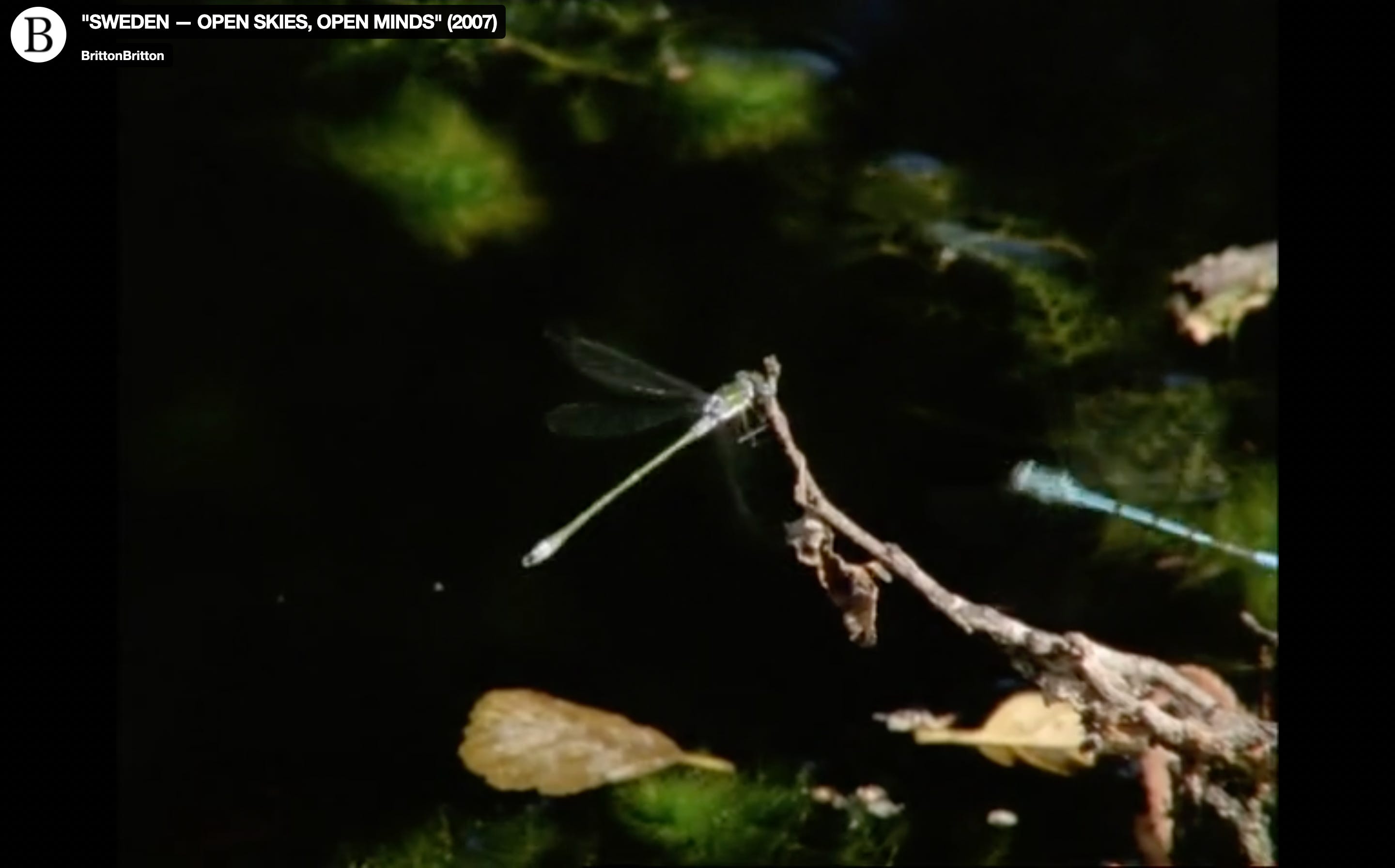
One of the very most difficult and politically sensitive projects in this long series was the official image film for Sweden that we directed and produced on commission by the Swedish Institute and an organization named “The Council for the Promotion of Sweden,” under the direction of the Foreign Ministry—a client that, however, due to the political sensitivity of the project, could not be mentioned under any circumstances. We produced the film for the launch of Sweden’s new official website, Sweden.se (we were, of course, also involved in the production of this website). The film premiered alongside the website at a grand event at the Stockholm Concert Hall in early spring 2007, with Crown Princess Victoria of Sweden serving as the official host and ambassador.
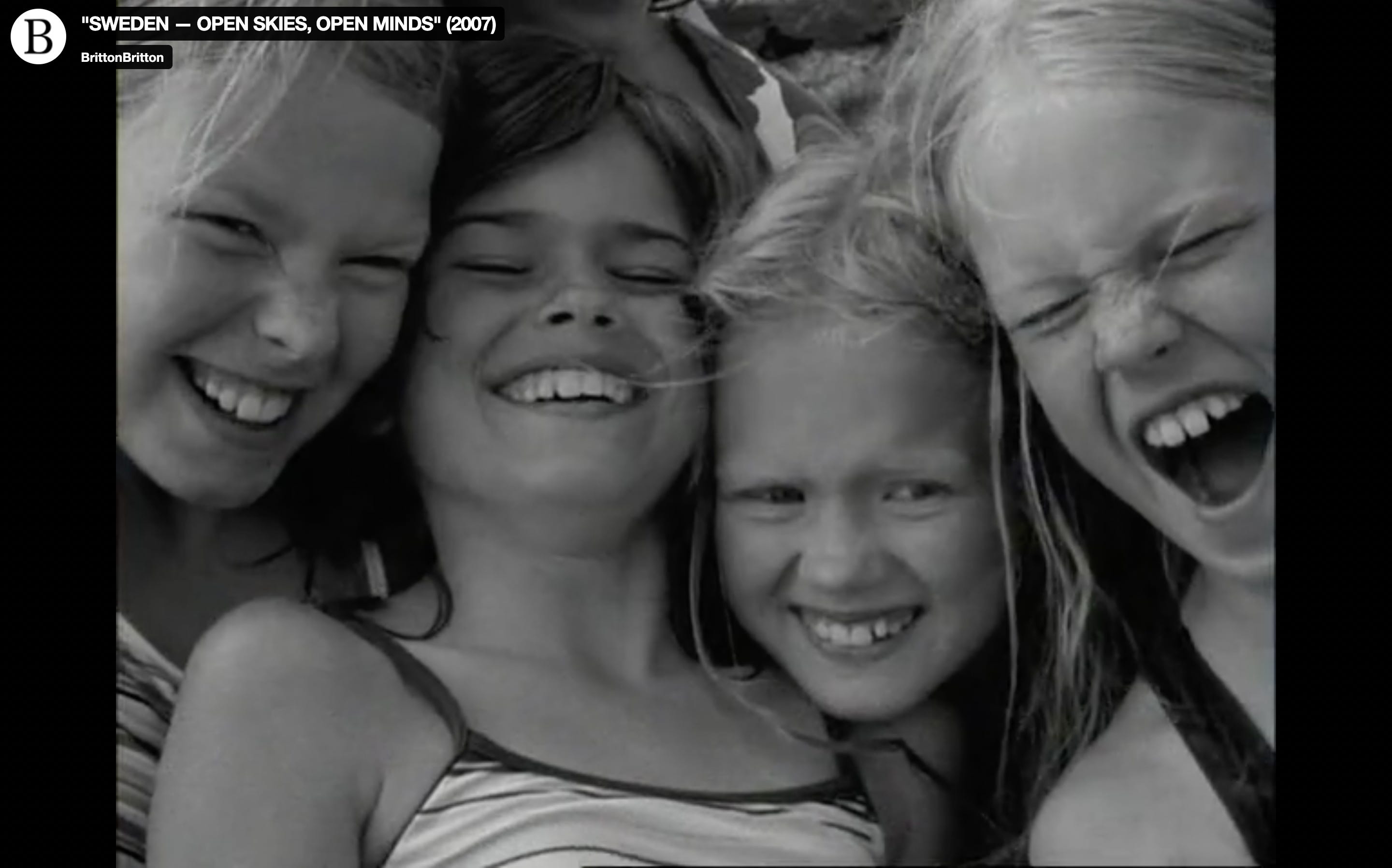
The film had an extremely tight budget—SEK 700,000, if I recall correctly, around 70,000 USD—as well as a very long list of different messages and Swedish phenomena that needed to be covered—everything from all geographic regions, the business sector, research, various humanistic and intellectual virtues (times were very different back then—Sweden still marketed itself as a moral superpower…) and much more besides, all told in three, at most four, minutes…
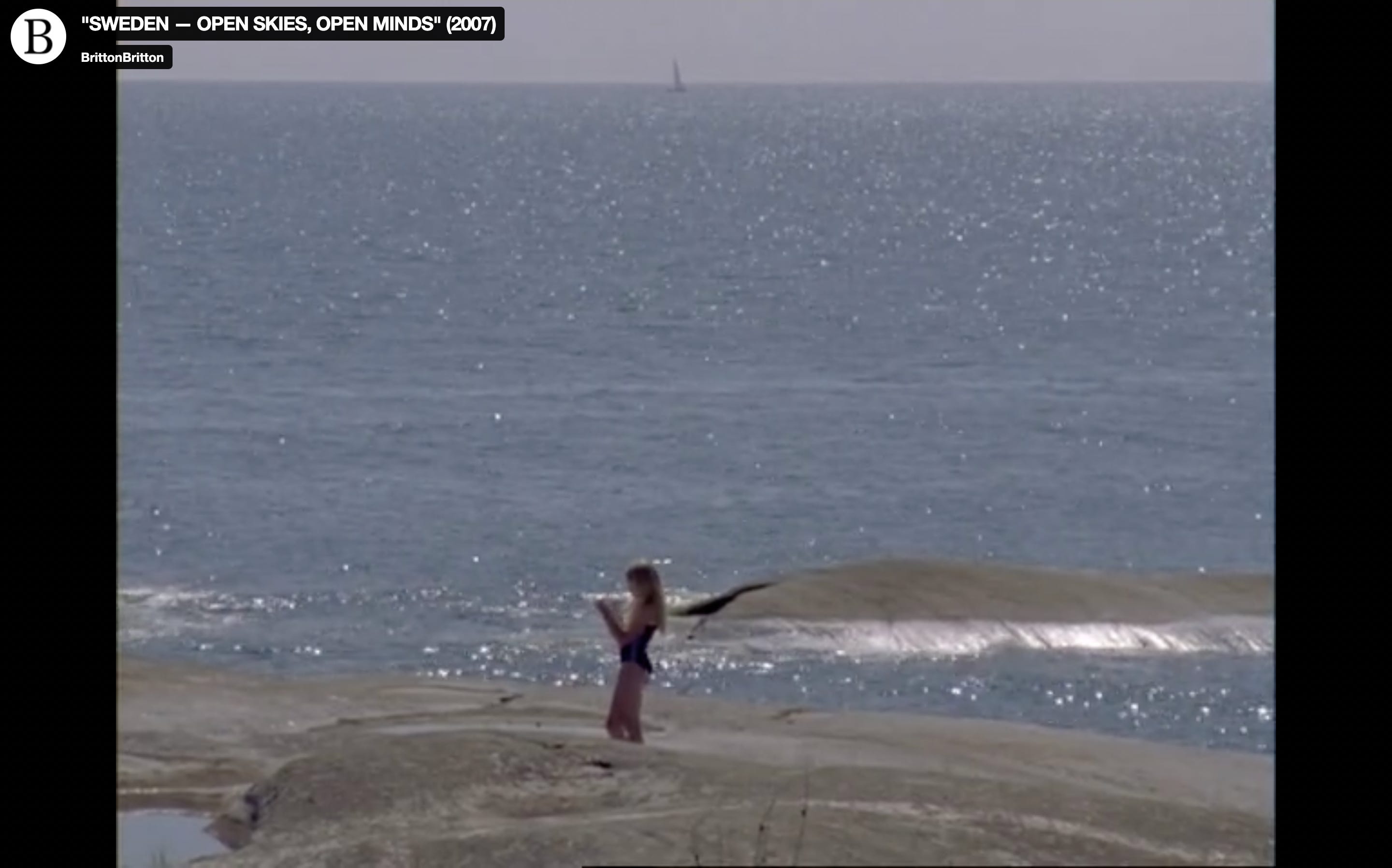
It wasn’t hard to figure out that this production budget—ridiculously low by film standards—would be eaten up in a matter of days by a film crew’s fees, modest rental costs for camera, studio, lighting and other equipment, travel expenses, and so on. I therefore promptly decided on a radically minimalist approach. I borrowed my friend and “professional big brother” Mikael Jansson, the master photographer’s vintage 16-millimeter Arriflex camera—free of charge, of course—and hired my then-creative “house partner” Peter Farago as cinematographer. The two of us traveled all over Sweden in my old Lexus (back when I still had a car), with the occasional trip by plane or other means of transportation, visiting everything from the mountain expanses of the Sarek wilderness in Northern Lapland to Stockholm’s gay and “open-minded” clubs (no, I don’t think that’s the kind of “open-mindedness” the film’s title—coined by our clients—refers to…). In total, it surely amounted to 30–40 days of filming, if not more, spread out over an entire year, as I considered it a given that all seasons had to be included.
The film is 100 percent “street-cast”—meaning that we filmed people we met by chance on our tour, and at events within our own circle, such as fashion shows, using only natural available light. None of the participants were paid. Often, we didn’t even bother to secure consent (I rarely played it safe in those days…). The entire footage can be considered more or less documentary in nature. I’ve always enjoyed operating in the gray zones between the documentary and the fictional, reality and fantasy. We spent the entire production budget on analog celluloid film and various expenses, including helicopters and a hot-air balloon(!) for aerial shots (this was before the era of drones—today, an almost absurd notion…) as well as, of course, post-production costs, music, and more. We edited this exceptionally extensive footage into a condensed film with an abundance of rapid-fire images, completely devoid of dialogue or other information, set solely to a specially composed soundtrack.
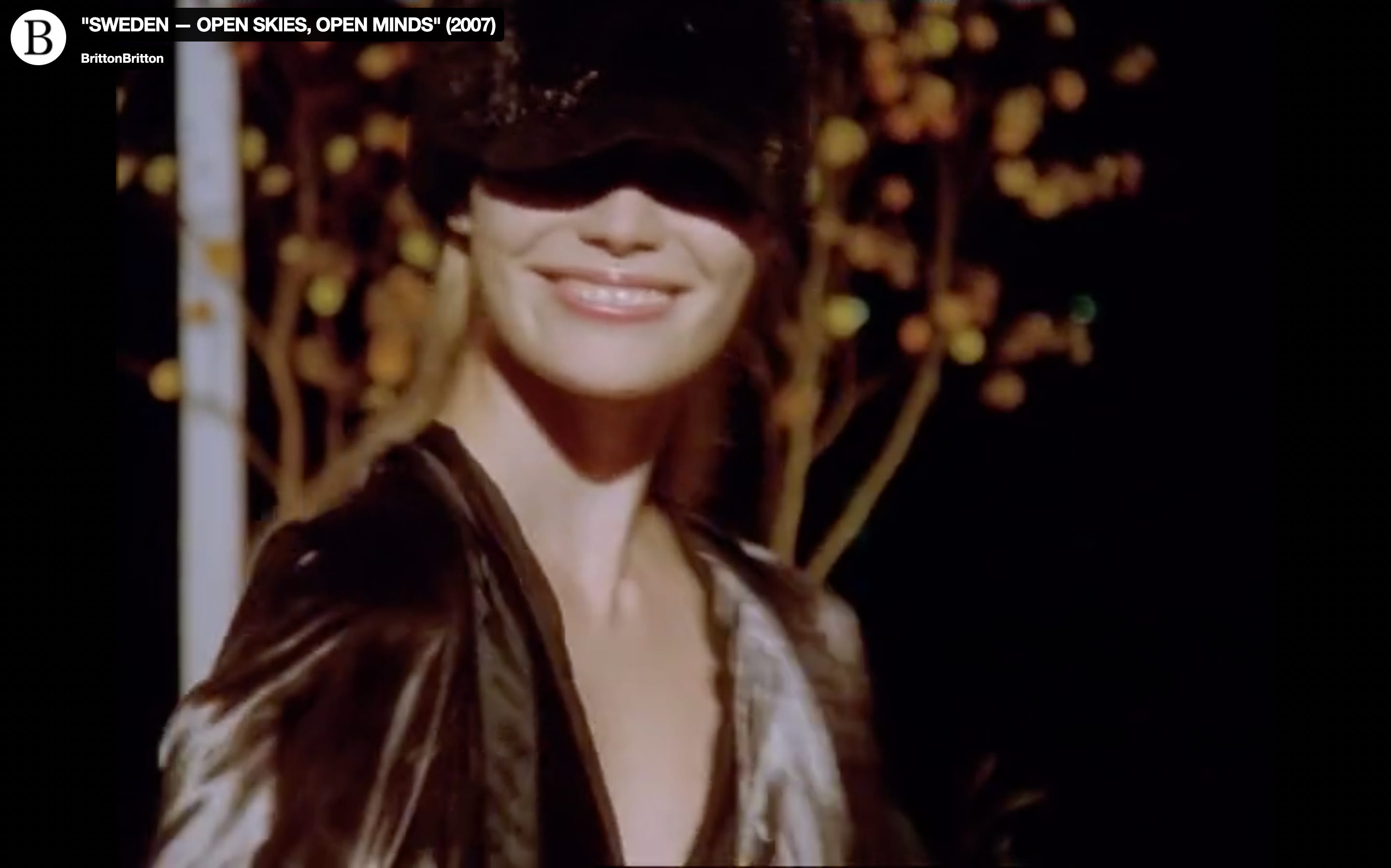
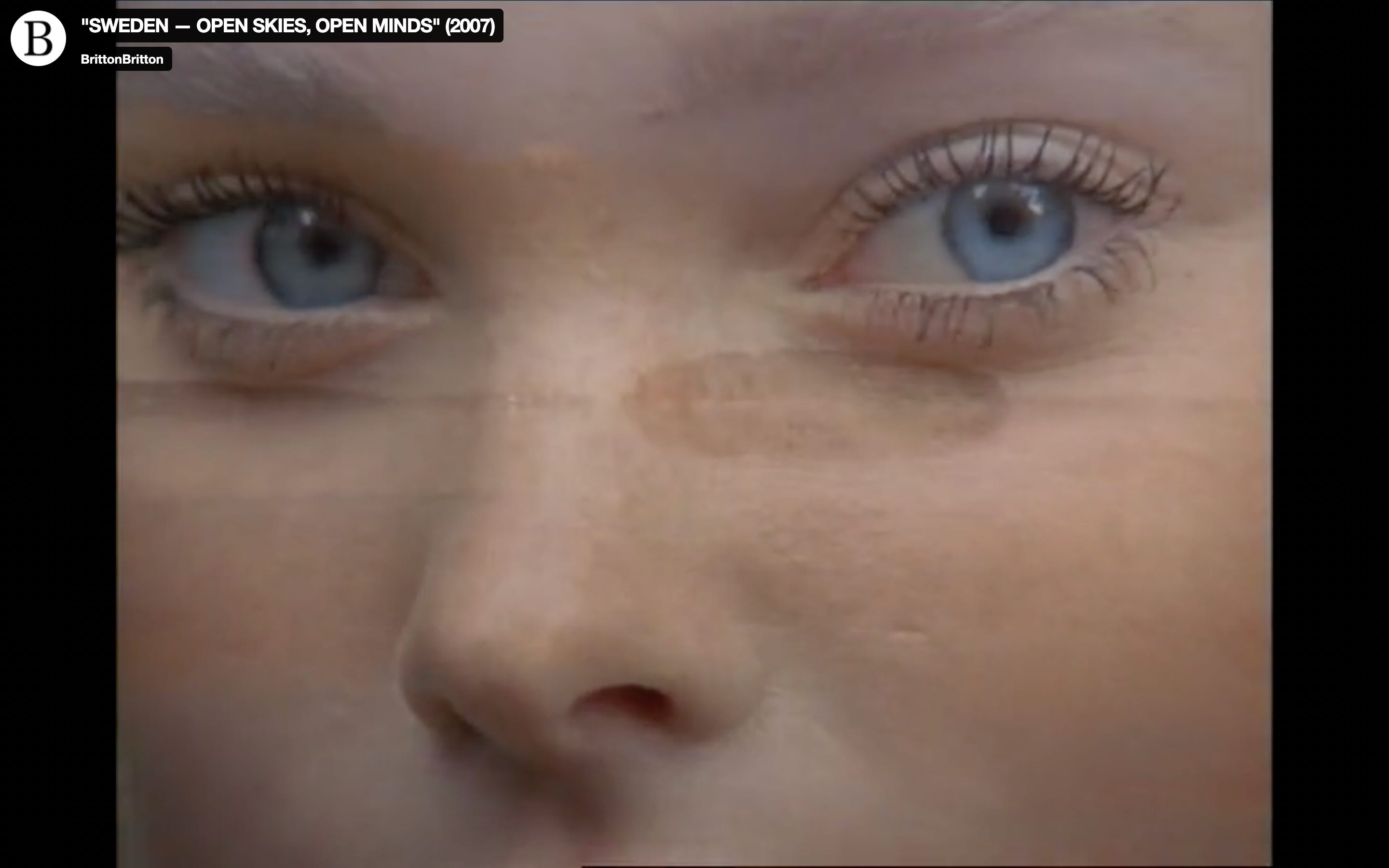
Like so much of what I myself—and we at BrittonBritton and Stockholm New—have created over the years, our Sweden film became extremely controversial, widely covered and hotly debated in various media. It was praised by many but also harshly criticized from every conceivable angle—too many blondes, too many young women, too many colored people, too much nature and folklore, too much debauchery and decadence, too little industry and high-tech (a criticism, of course, voiced primarily by the older men among the clients), too much Stockholm, too little Gothenburg—and so on, and so on, ad infinitum.
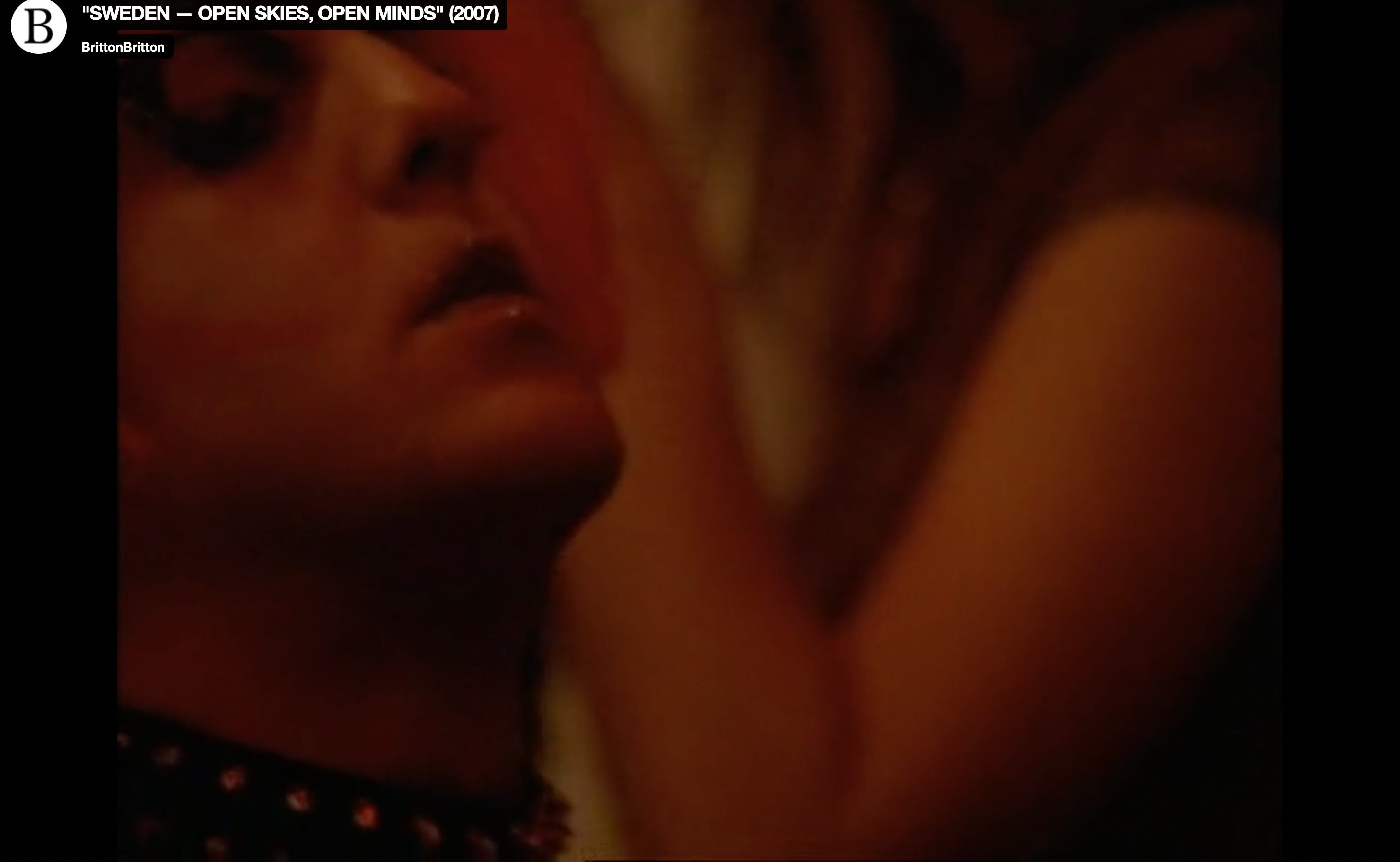
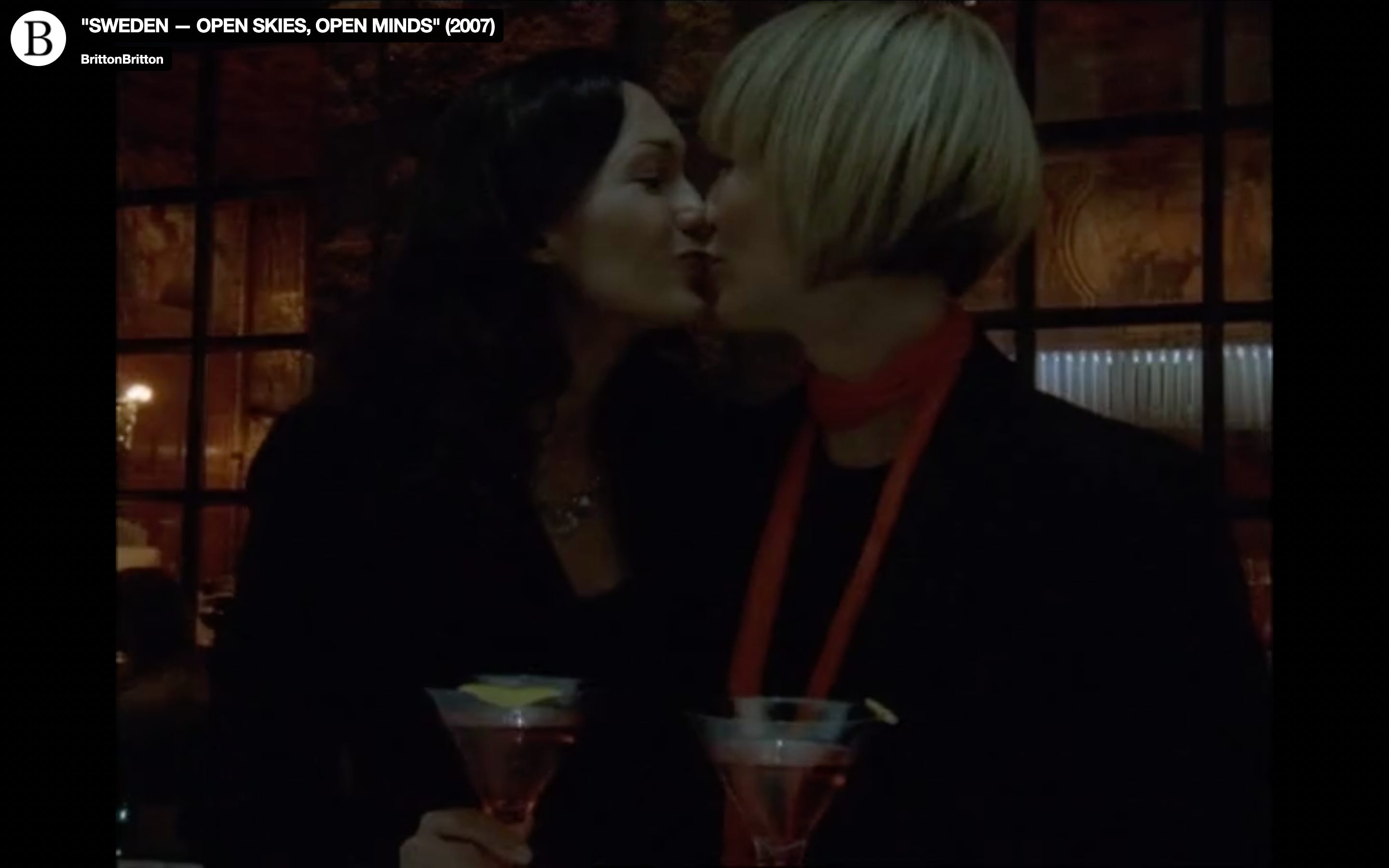
However, it was our infamous “girl kiss” that caused the biggest stir. Our extensive list of requirements included demonstrating that Sweden was a nation tolerant on sexual orientations. Filming males in “intimate situations” was too provocative—that much was clear from the start. So we opted for a clip of two middle-age women kissing each other demurely, which our clients approved. When the film was released, however, and our “girl kiss” was widely reported both here at home and internationally, they got cold feet, withdrawing this approval. The implication was that we were the ones who had slipped this indecency through. How would this be perceived in parts of the world with less liberal views on such matters? What a terrible thought! Danger ahead! Plans to withdraw the film entirely were discussed intensely before the storm in the teacup blew over. In hindsight, the whole thing seems, as so often, tragicomic, but at the time it was deadly serious—I can assure you of that…
I hadn’t thought about or seen our Sweden film in many years. When I came across it online while working on this website, I was pleasantly surprised. It actually feels even better now than it did back then. Considering the dire circumstances—and all the “must-haves” like Volvo, mines, pharmaceutical factories, quotas of every possible kind, and so on—I think we still managed to achieve a powerful whole with both energy and heart. I believe that, in its simplicity, it offers a lavishly rich, full-bodied portrait of our country. I feel pride in and love for our homeland when I watch the film.
I directed the film myself. The cinematographer is Peter Farago. The editor is Marcus Lindqvist. The music is exclusively composed by the multi-award-winning Christian Olsson, known as a member of the Fläskkvartetten band.
Relaterade artiklar:


Swedish Style Mumbai!

Check out our Swedish Style Mumbai! website here! More text, pics, films and much more below.
Stockholm New York

The most large-scale and spectacular of the huge culture and lifestyle extravaganzas that we staged around the world with our magazine Stockholm New in the late 90:s and early 2000:s—a concept of our own invention. For three days a…
Swedish Style in Tokyo 1 & 2

After visiting our pioneering event Living in Sweden in Milan in 1998, our dear friend Ewa Kumlin, then the Swedish Ambassa…
Stockholm New—the book

The 496-page heavy coffee table book which we launched in 2013, for the 20-year anniversary of the start of our magazive Stockholm New, which we published in 12 issues 1993-2002. The book doubled as a catalog for our great exhibition Stockholm New — national romaticism form double turn-of-the centuries: fashion photography me…
About Claes Britton

I was born and raised in the Östermalm district in central Stockholm and spent my summers in Dalarö in the Stockholm archipelago. I have lived in these places my entire life, except for several periods during my childhood and adolescence when my family lived first in London and then in Los Angeles. I attended school in both places. There, I developed an…