In 2007, we with BrittonBritton won a competition for the honorable commission of designing, image editing and and producing the heavy coffee table book for Moderna Museet’s (The Modern Museum’s) 50-year anniversary book in 2008, called simply The History Book, or Historieboken in Swedish, in two separate language editions.

We had no influence over the text content. That was decided and under production before we received the commission, under leadership od project manager Anna Tellgren, curator/intendant, and director Lars Nittve — basically a series of long academic articles by a number art historians on various aspects of the museum’s half-century history.

For me, the most memorable and rewarding part of our work with this book was spending several weeks of work on a total inventory of the museum’s photographic archive. Having grown up in the museum, where my aunt and her friend managed the children’s cinema, it was a magic time capsule, bringing back precious childhood memories.

I found a lot of images that had never before been published or even seen from the museum’s heroic history. I think it’s fair to say that it turned out to be a quite potent, exciting set of imagery that in itself told a thrilling visual history.

Certainly, our work on the Moderna Museet anniversary book was another step in my “education” in the museum, its history and its collection, which I started already in my youngest childhood, continued throughout my youth, on into my mature career with my interviews with Pontus Hultén in 1996 and research for Moderna Museet article in Stockholm New and various other writings, eventually ending up with my 12-year endaevor of researching and writing my biography on Pontus Hultén, Pontus Hultén—den moderna konstens anförare (2022) and its English language edition Pontus Hultén—Commander of Modern Art (2025).

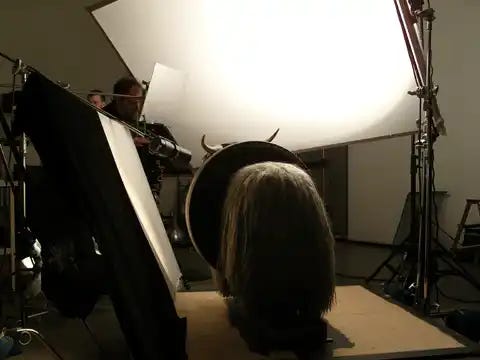
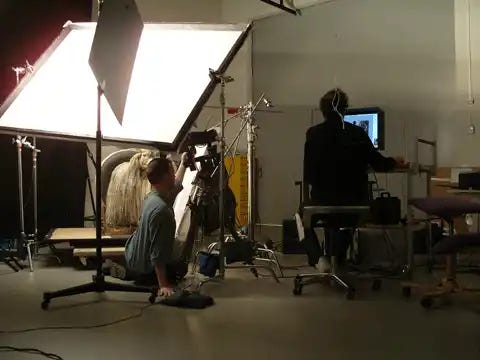
Another highlight of this project for me personally was our photography of Robert Rauschenberg’s masterpiece Monogram (1955-1959), this cornerstone and “logo work” for Moderna Museet. The sad eyes of “The Goat” were a powerful childhood memory of mine—something mystic that told me a lot of what awaited in adult life. I was very happy that Lars Nittve and the project management bought my idea to conduct an extreme detail photographic study with our friend and longtime collaborator Frederik Lieberath, the master still-life photographer, of those eyes, to be divided into front and back cover of the book slipcase—the bright and the dark side of art, as I saw it. Realizing this idea with the fragile, priceless masterpiece, which we were reluctantly allowed to remove from its armored glass cage, was complicated. The image is actually made up of eight pictures of extremely high resolution, which took us two days to execute in a makeshift studion that we built in the museum’s storage.


Related articles:

Pontus Hultén—den moderna konstens anförare

Min mångfaldigt prisbelönta, mycket omskrivna biografi över Pontus Hultén publicerades 2022 (Albert Bonniers förlag). Boken bygger på nio års research- och skrivarbete, med bland annat över 200 intervjuer utförda i 11 länder. Boken fick strålande recensioner och har, måste jag påstå även om blygsamhet är en dygd, blivit en klassiker. Läs citat om boken …
Three sacred monsters

My entry for the catalog for Centre Pompidou:s blockbuster exhibition Niki de Saint Phalle, Jean Tinguely, Pontus Hultén, presented in the Grand Palais in Paris June 2025-January 2026. The catalog (and the text) is available to order in French and English editions.
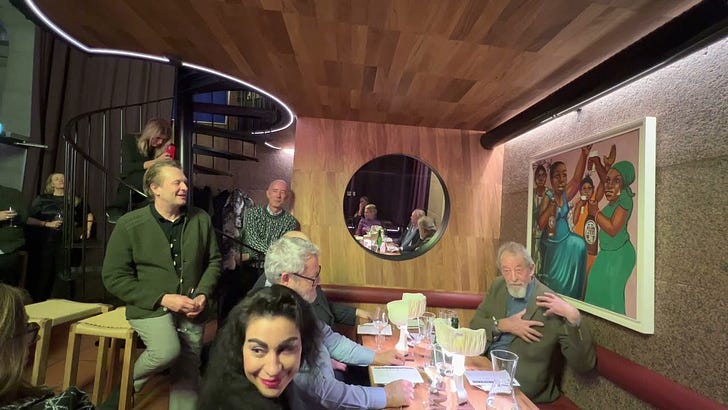
Pontus Hultén lecture at the symposium Pontus Hultén—une légende en question

Watch my lecture 1.36 into video!